Day 2 – Friday, January 14, 2022 (Surgery)
We were up early again. We needed to be at the hospital at 8. We went down a few minutes early to check out. The hotel staff is very used to GoLight patients. They know when your shuttle will be there or will point it out if it has arrived and they will help with your bags. The drive to CIBA was quick. Upon arriving we settled our accounts and made payments before being taken upstairs to the rooms we would be using. This small hospital is purpose-built for weight loss surgeries. There is no elevator but there is a nice sloping ramp that switchbacks between floors and makes it possible to push beds and wheelchairs or allow recovering patients a place to walk between floors (there are stairs too). The rooms are standard hospital rooms that would look completely familiar in an American hospital. Each has a TV, and we brought a ROKU so we could watch whatever we wanted. Mexican Netflix seems to have a lot more movies and 'good stuff' that American Netflix just doesn't have any more.
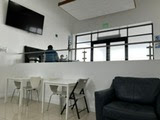


We changed into our surgery gowns, got in bed, and they gave us a nice little measuring cup of a clear liquid that I believe was clonazepam. It is an anti-anxiety, calming, tranquilizing medicine. Then came the hurdle that I was dreading more than the surgery itself: the I.V.
When
I’m hurt or having a procedure done I have the ability to remain stoic, calm,
and collected on the surface. But, there
is some kind of deep subconscious fear that I have of doctors and needles. Consciously I don’t mind and I don’t really
feel afraid, but I have passed out on doctors more than once and even on an
unsuspecting dentist one time. Even
going to the doctor when there won’t be any kind of painful tests will cause my
heart to race and my blood pressure to spike (you can think less of me if you
want, but that’s how it is). Many people
in my family also have terrible veins that are small and roll around easy. Add to that a bunch of fat and I’m a “difficult
stick” who also has a bit of IV-phobia.
So it begins, the nurse started
with the whole “open and close your hand” thing. They tapped all over my arm then went for my
hand. In a pleasant twist of fate they
only had to reposition once to get my vein.
The girl who did my vein did great.
Since most who go to CIBA are severely overweight I would imagine that difficult
IV insertions are common, so the staff is likely better than most. My wife had some issues with her first I.V. placement, but had no complaints about pain or staff members needing to chase her uncooperative veins (lucky).

There
were a few sleeve surgeries and I had been told that my bypass surgery would
happen later in the day after they were all done. My wife was wheeled off for her surgery while the staff finished prepping me. I decided to try and get comfortable figuring
it might be a few hours, but I’d no more than gotten comfortable in my hospital
bed before the wheelchair arrived and I was taken downstairs. Final preps were done for surgery and I
walked into the OR (I thought this was strange, but meh). I laid down on the table, the
anesthesiologist mentioned something about how I would be falling asleep
quickly. A thought formed in my mind
about “How? You haven’t given me anything yet,” but I was out before completely
finishing that thought.
I woke
up later and the drug-fog lifted pretty quickly. There was someone else in the room, but I
couldn’t tell you who it was or what they were doing. The staff was there with me quick and after a
few minutes they wheeled me up to my room.
With this kind of surgery instead of one large incision, they make few small
holes. Next, they pump the cavity with
some inert gas to give them room to see and move the instruments around. This is much better than the old way they
would have done a surgery like this where there would have been a huge scar down
or across your belly and a lot more traumatic cutting to underlying tissues.
When finished with the surgery
itself, they get most of the gas out, but some always gets left behind. This gas can be quite painful and the only
way to get it out is to walk and move around which encourages your body to absorb and expel it.
We all knew going into the surgery that walking as soon as possible was
necessary. That was no problem for me because I wanted out of that bed. The orderly who wheeled me to my room asked me to call for help when I was ready to get up, but I was on my feet
before he left our room. My wife was back by this time. She was fully alert by this point, her surgery had been over for a while by then. The hospital is built with walking in mind
and there is a hallway that wraps around the entire top floor. If stretched out, the hallway is probably
about 100 meters. I walked it 5 times
right away with very little pain.
The rest of that day was walking every hour or two (I even got brave and ventured down the ramp to the bottom floor). IV meds were on a regular schedule. It was rather uneventful. I worked on some job stuff I’d brought with, watched TV, and snoozed. When I was ready for bed they gave an injection of blood thinners in my belly. It wasn’t pleasant, but it wasn’t too bad. At bedtime my wife was in a bit of pain and asked for something to help with sleeping. They ended up giving her some morphine (none for me though). They gave us both a drip of the same medicine we’d gotten earlier (clonazepam, I think). Whatever it was, it worked, and I was out for the night.
TL/DR
Arrived at CIBA, surgery was quick. The rooms are nice. Walking is the only way to relieve gas pain. You have to walk.
Comments
Post a Comment